Semrush Review: Is It Worth It for a Small Business in 2026?

Semrush Review: Is It Worth It for a Small Business in 2026?
If you've been reading about SEO for more than a few minutes, you've run into Semrush. It's the tool nearly every guide recommends, including our own comparison of SEO tools for small business. The question worth answering is the one a small business owner actually cares about: is it worth paying for, specifically for a business your size?
This is a closer look at that question — based on what Semrush actually does, what it replaces, and who gets the most out of it.
👉 Try Semrush free and test it against your own website →
Key Takeaways
- Semrush is one of the most complete SEO platforms available — keyword research, competitor tracking, site audits, rank tracking, and local SEO in one subscription.
- For a small business, the biggest advantage is consolidation: it replaces several separate tools and hours of manual research with one dashboard.
- It has a real learning curve in the first week simply because of how much is packed in — but the platform is designed so you can start with just one feature and expand from there.
- It's a strong fit if you're actively managing SEO across multiple pages or want ongoing competitor visibility. The free trial lets you see exactly what it would show for your site before paying.
- The most sensible way to judge fit is to test it against your own website and a real competitor during the free trial, not to guess from a feature list.
Table of Contents
- What Semrush Actually Does
- Where Semrush Is Genuinely Strong
- What to Expect in Your First Week
- Semrush Pricing, in Plain Terms
- When Semrush Makes the Most Sense
- How to Try It Without Committing
- Frequently Asked Questions
What Semrush Actually Does
Semrush is an all-in-one SEO and digital marketing platform. For a small business, the parts that matter most are:
- Keyword research — search volume, difficulty, and related terms, so you're targeting phrases with a realistic chance of ranking rather than guessing
- Competitor analysis — see what pages and keywords are driving traffic to businesses outranking you
- Site audit — a scan of your website that flags technical SEO issues in plain language
- Position tracking — monitors where your pages actually rank over time, so you're not relying on manual checks
- A local SEO toolkit — useful specifically if you manage listings across multiple directories, not just Google Business Profile
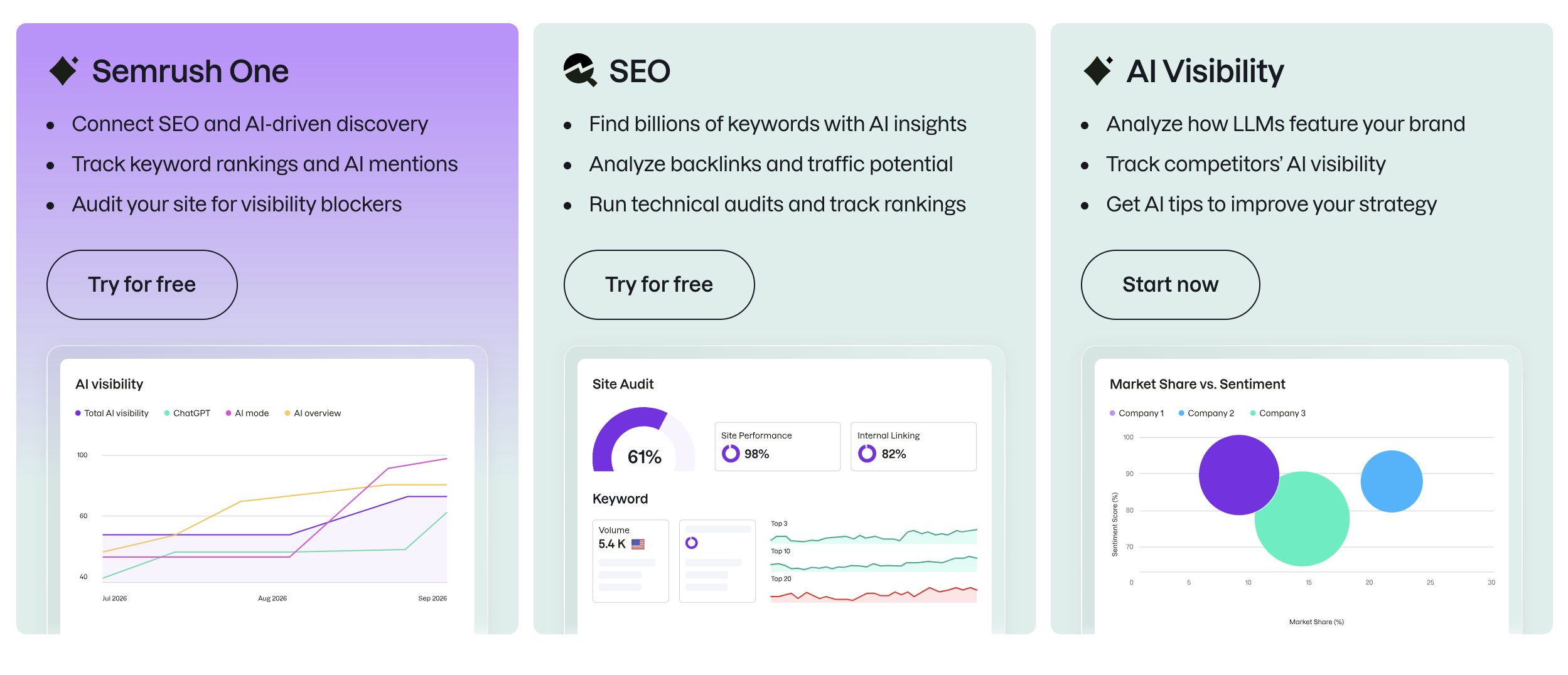
It's built to be a single dashboard covering most of what the step-by-step process in our beginner's SEO guide walks through manually — with more depth and less manual digging.
👉 See what Semrush would show for your site — start a free trial →
Where Semrush Is Genuinely Strong
Keyword research depth. The difficulty scoring and related-keyword suggestions are consistently cited as more useful than what most cheaper tools provide, particularly for identifying realistic long-tail opportunities rather than just broad, competitive terms.
Everything in one place. For someone managing SEO alone, not having to cross-reference four separate tools is a real time saver, not just a convenience. What used to take an hour of tab-switching takes a few minutes in one dashboard.
Local SEO support. Businesses that depend on local search consistently mention this as one of the more practically useful parts of the platform, since it centralizes work that's normally spread across multiple directory sites.
Regular updates. The platform is actively maintained to track changes in how search results and rankings actually work, rather than relying on stale methodology.
Competitor visibility you can't get from free tools. Search Console shows you what you rank for. Semrush shows you what your competitors rank for — and what they're gaining on. That alone changes the decisions you make about content.
👉 Start your free Semrush trial →
What to Expect in Your First Week
A few things worth knowing upfront, so the platform feels productive from day one:
Plan to spend 30–45 minutes on setup. Semrush delivers the most value once it's connected to your site and tracking your target keywords. Add your domain, set up a project, and enter a handful of keywords you already want to rank for — then let position tracking start collecting data.
Start with one feature, not all of them. The platform is broad, and trying to learn everything at once is the fastest way to feel overwhelmed. Most small businesses get the quickest win from either Keyword Magic Tool (for finding new terms) or Site Audit (for spotting technical issues). Pick one, get comfortable, then expand.
Use the free trial on your own site and one real competitor. This is the part that converts the trial from a tour into actual insight. Run a competitor through the Domain Overview tool and compare it to yours — you'll immediately see what they rank for that you don't.
Expect the value to compound. Semrush isn't a one-off task tool — the keyword data, rank tracking, and competitor monitoring get more useful the longer they run. The first month gives you a snapshot; three months gives you a trend.
Semrush Pricing, in Plain Terms
Semrush's plans scale with how much you use the platform — more projects, more tracked keywords, and more users cost more. For an exact, current breakdown, check Semrush's own pricing page, since plans and pricing tiers change and this article won't stay current on exact numbers.
The practical takeaway for a small business: if you're currently paying for separate keyword research, site audit, rank tracking, and competitor analysis tools — or spending hours doing that work manually — Semrush replaces all of them in one subscription. For a business doing SEO seriously, that consolidation is typically what justifies the cost. And because the free trial gives you full access before you pay anything, you can see exactly what the platform would show for your site before deciding if it fits.
When Semrush Makes the Most Sense
Semrush earns its cost fastest for:
- A small business actively managing more than a handful of pages, where manual keyword and competitor research has become a real time cost
- A business competing in a market with identifiable competitors worth tracking — not a category with no clear rivals
- A local business managing listings across multiple directories, where the local SEO toolkit replaces several separate manual tasks
- Anyone who's worked through the free-tool basics in our beginner's SEO guide and has hit the ceiling of what Search Console and manual research can tell them
- Businesses that want one tool covering multiple SEO jobs, rather than paying for three or four narrower tools that each do one thing
If you recognize your situation in any of those, the free trial is the fastest way to confirm whether the paid tier delivers what you need.
👉 Try Semrush free — see if it fits your business →
How to Try It Without Committing
The sensible approach is to start with the free trial rather than subscribing outright — use it against your own site and a real competitor to see whether the data actually changes what you'd do next. If it does, the monthly cost is easy to justify. If it doesn't, you've lost nothing.
👉 Start a free Semrush trial and test it against your own website →
Frequently Asked Questions
Is Semrush worth it for a solo small business owner? For most solo owners who've outgrown free tools and are actively managing multiple pages or tracking competitors, yes — the consolidation alone usually justifies the cost. The free trial is the honest way to check against your own site.
What's the difference between Semrush and Ahrefs for a small business? Semrush is broader — keyword research, competitor tracking, site audits, rank tracking, and local SEO in one place. Ahrefs is generally considered stronger specifically for backlink analysis. See our full SEO tools comparison for where each fits.
Does Semrush guarantee better rankings? No tool can guarantee rankings, and Semrush doesn't claim to. What it provides is better data to make SEO decisions with — the actual ranking work (content, technical fixes, links) still has to happen.
How long does it take to see value from Semrush? You'll see useful insights — competitor gaps, keyword ideas, technical issues — within the first session. Rank tracking and trend data become more valuable after 30–90 days of data collection.
This article includes an affiliate link, which means we may earn a commission if you sign up through it, at no extra cost to you.
Want your site's SEO handled without evaluating tools yourself? Smart Tech Build can set up and manage the technical and content foundation for you. Get in touch →
Related Posts:
Kehinde Adegbesan
Kehinde is the founder of Smart Tech Build and a passionate software developer. He writes about AI, web development, and tools that help businesses grow.
Connect on LinkedIn